A developer's letter
The story behind Plai: Village Tale
Hi — I'm Victor Jdanov, a Python developer from Moldova who makes games in his free time. This is the story of how a half-remembered childhood puzzle game became a cozy village builder set in 1476 Moldova.

It started with a childhood memory
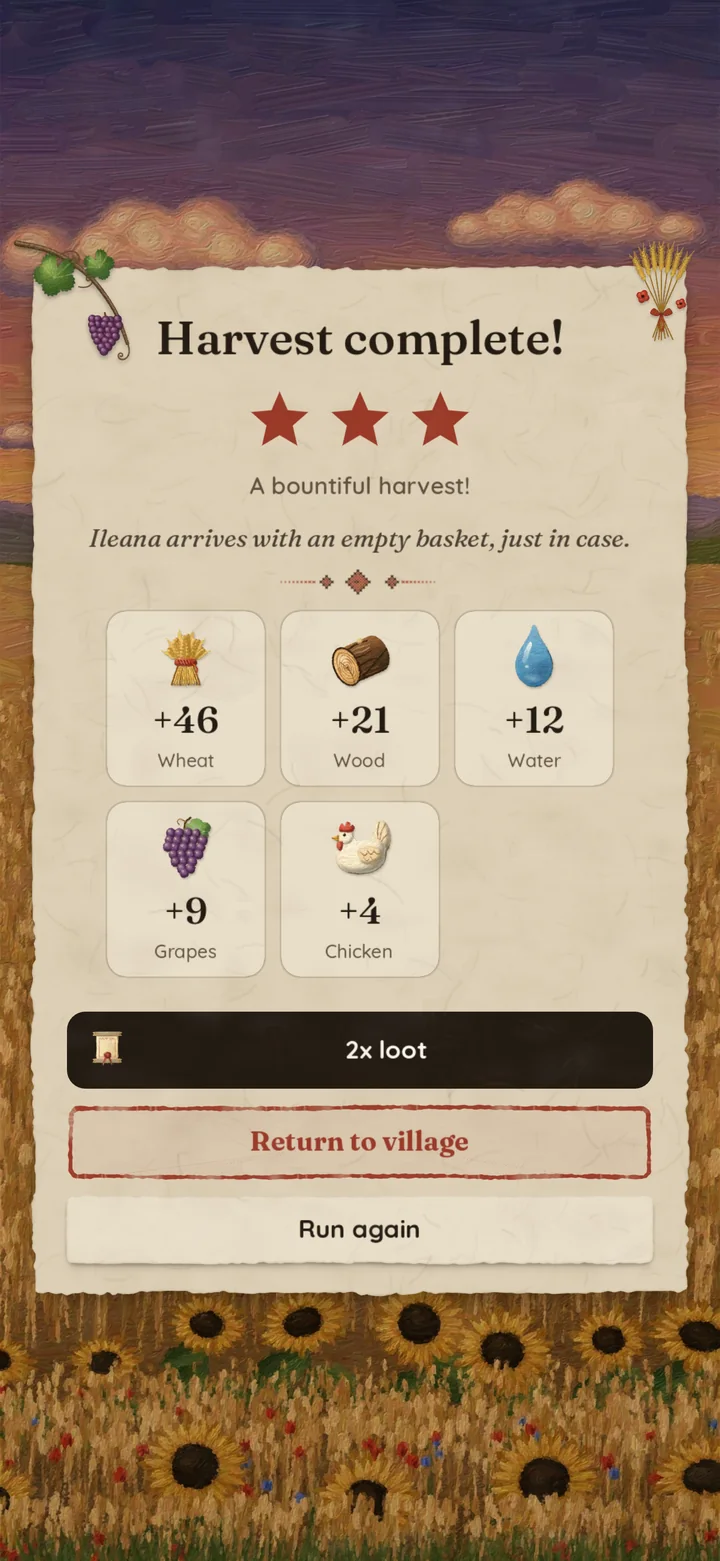
About half a year ago I built a small prototype, trying to recreate the mechanics of a game I loved in my school days. It was a match-3 — but unlike almost every other match-3, it had a cozy village wrapped around it, and you never swapped tiles. Instead, you drew long chains across the board. Landing a really long chain produced a hit of joy I never forgot.
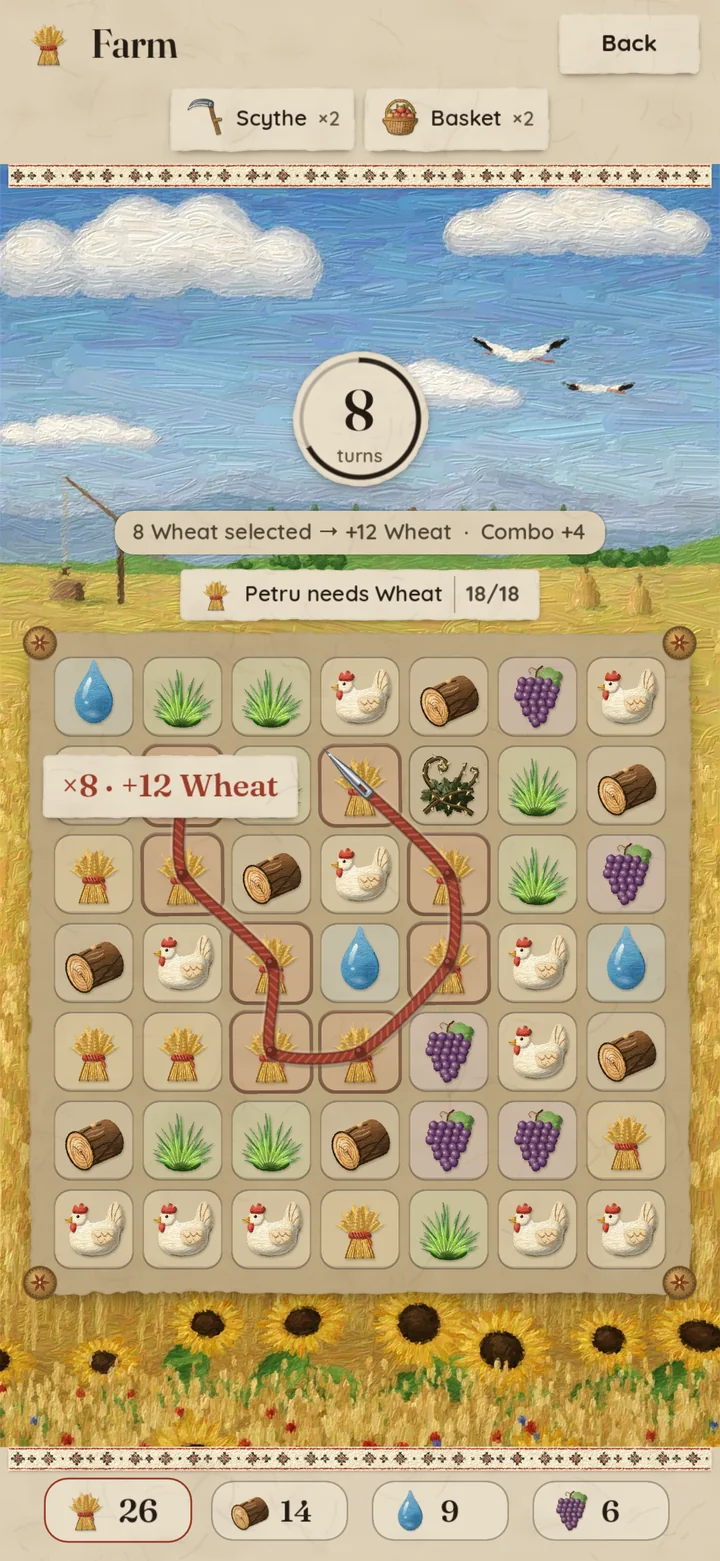
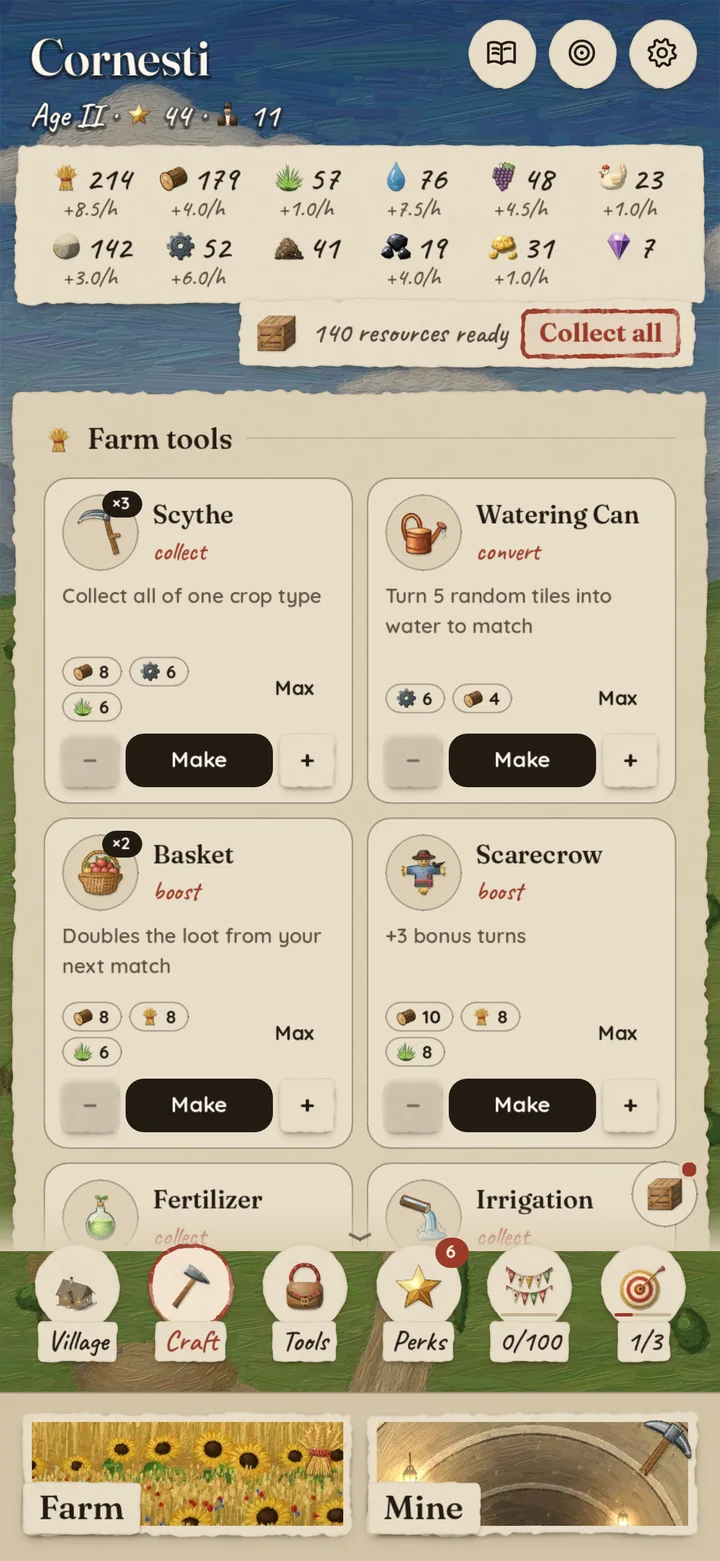
I polished the prototype a little and handed it to my wife and a few friends. At that point it was nothing but a farm field where you collected chains — no village, no buildings, nothing. They loved the feel of it anyway, so I kept going: a second board in the form of a mine, houses to build, villagers to assign to work, tools to craft.
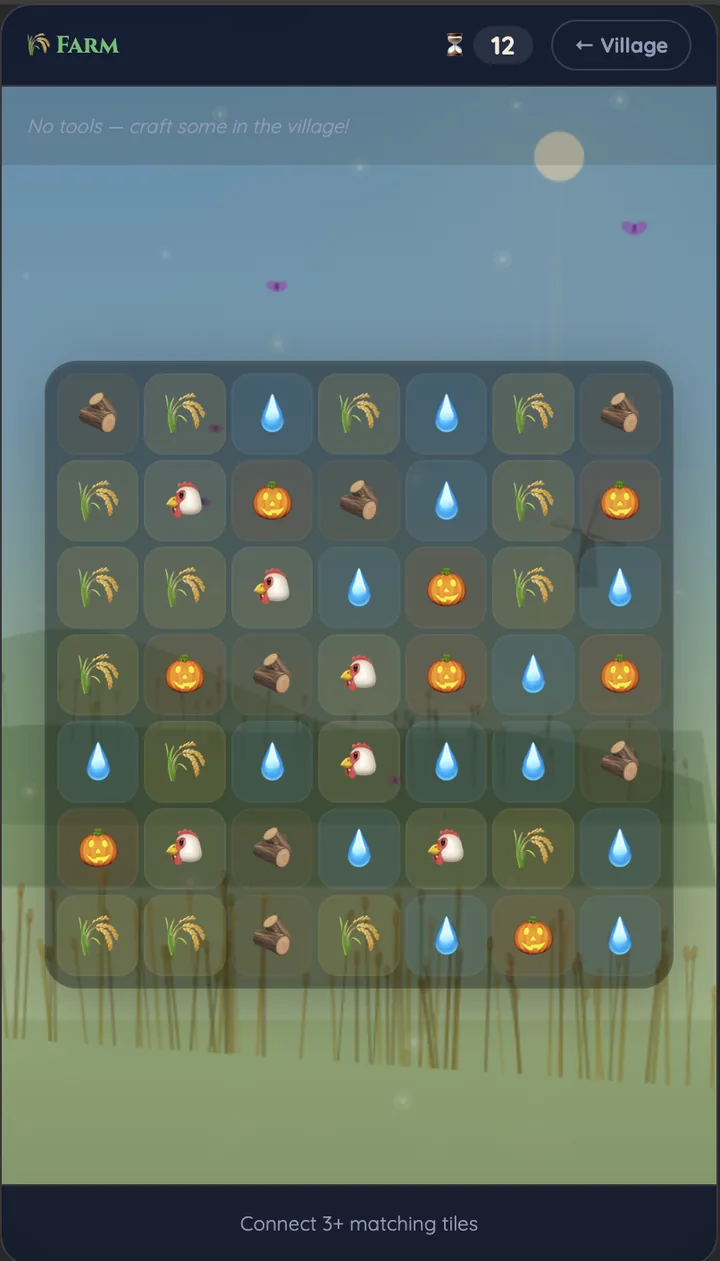
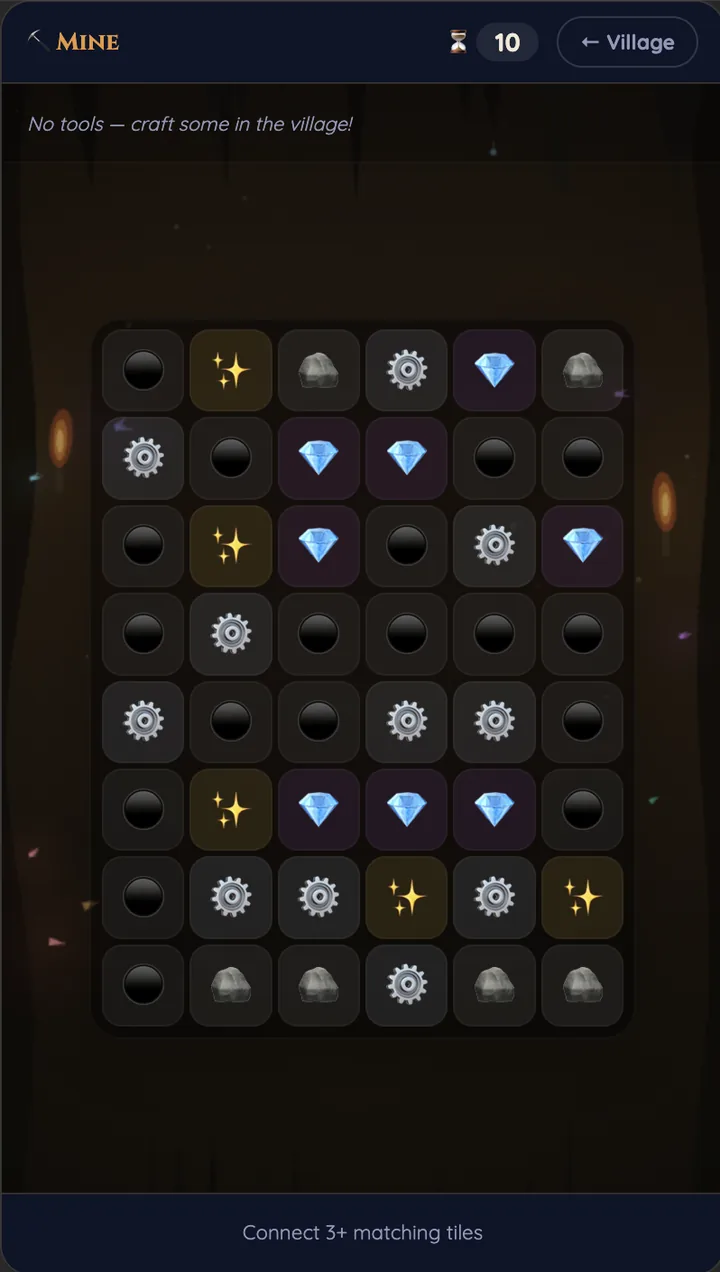
Slowly it started to resemble a real game. But something was missing. The setting was default-medieval — generic knights-and-timber — and that felt like the least interesting choice I could make.
Why Moldova
Most of the work happened on weekends, which I often spent in the countryside — in Dubăsarii Vechi, a village on the Dniester. At some point it struck me that there are almost no games set in Moldova — and if any exist, they're nearly impossible to find. Honestly, that stung. And then it clicked: my own country was the perfect setting for exactly this kind of warm, unhurried game.
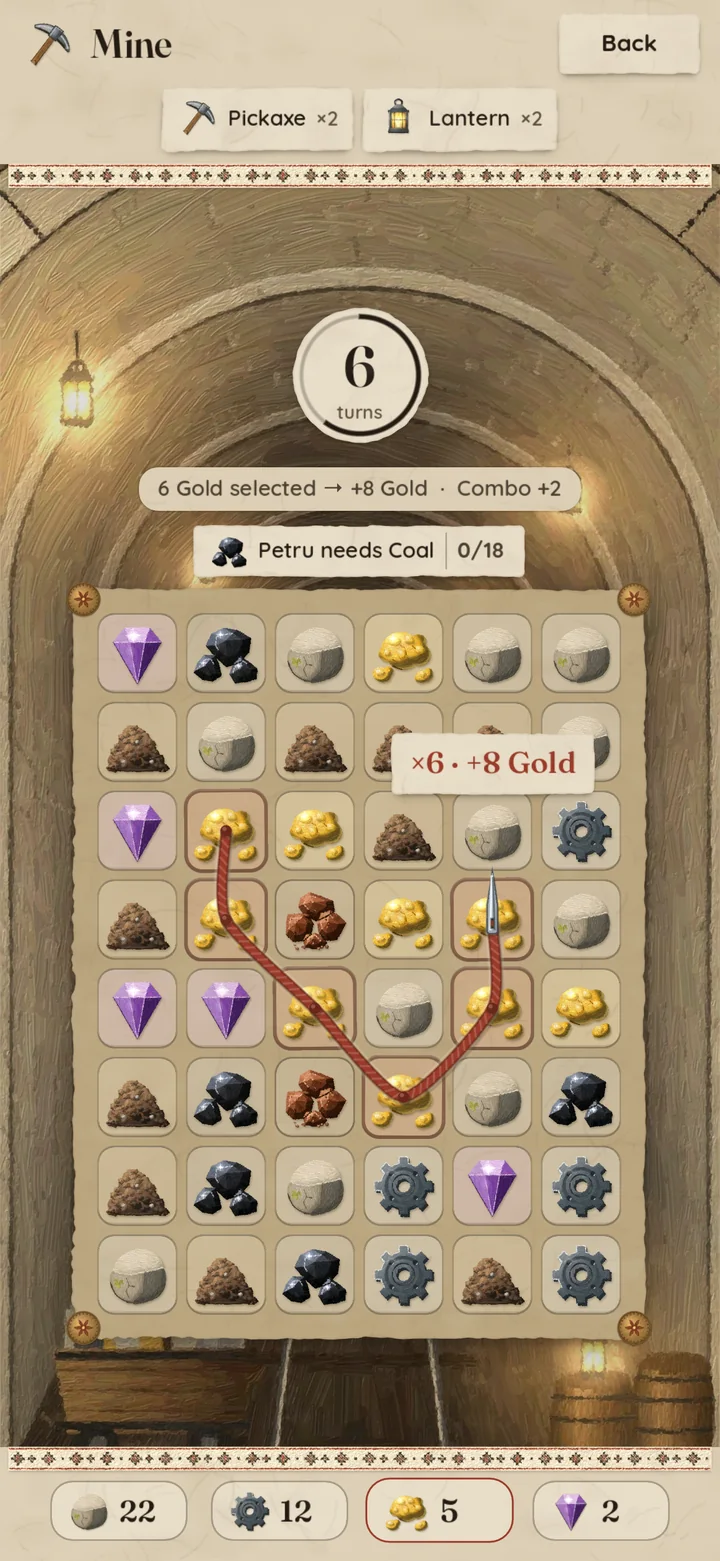
Committing to it meant rebuilding the entire interface — covor patterns, grapevines, wheat and gold instead of generic panels — and adding a raft of new mechanics. Thankfully I had chosen Godot as the engine. It let me iterate at a pace where I could see every change instantly, without waiting minutes for a rebuild. I'm endlessly grateful to the Godot developers for building such a wonderful tool.
Over time the game grew daily and weekly quests, and random storybook events that meet you on the road home from a puzzle run. Everything Moldovan that ended up woven into the game has its own page ›
A village that talks back
My favorite feature is a small one: a single line of text on the village screen — a running village chronicle.
It's a laconic news ticker that reacts in real time to the state of your game, generating Dwarf-Fortress-style updates about the daily life of your villagers — Vasile, Grigore, Doina and the rest. Depending on how you manage resources, what you've built, and how your quests are going, you might see:
I wrote a great many of these and tried to make them genuinely funny, so the village feels alive — even though you can't yet watch villagers walk its streets. That part is planned for the game's next chapter.
How it plays
Put together, the loop goes like this: head to the farm or the mine and draw chains of resources until your turns run out. Come home with the haul — build and upgrade houses, welcome new villagers, hand out jobs. Then the village works on its own: buildings keep producing even while the game is closed — but no longer than eight hours, after which your villagers honestly go to bed. Even virtual people get tired.
Surplus goes into crafting tools and unlocking perks — bigger storage, richer harvests. On top of that sit daily bounties, the weekly village hram festival, and chance events on the road home. And when your settlement reaches its peak, you can begin a new age: start over with bonuses from your past life and fresh challenges ahead.
Honest free-to-play
The game is completely free, supported only by ads — and I built that the gentlest way I could: you will never see an ad unless you ask for one. No banners popping up mid-play, no forced interstitials between puzzles — aggressive mobile monetization irritates me as a player, and I refused to ship it. Every ad view is optional: you watch one only if you decide you want a bonus reward or an extra turn. The whole game can be finished without watching a single one.
This isn't "game of the year" material, and I know it. It's a simple puzzle with village management, made first and foremost for a Moldovan audience — something to unwind with in your free time. If even five people from my country play it and enjoy it, my job as a developer is done. It plays fully offline, and the little data it does collect — basic app statistics, plus what the ad network needs — is set out in the privacy policy.
Twelve testers and two nervous weeks
The most nerve-racking stretch was Google Play's closed test: to earn a full release, a new app must run a closed test for two weeks with at least twelve participants while Google watches activity, errors and crashes. I asked everyone — family, friends, colleagues, people on LinkedIn. I'm grateful to every single person who helped carry that stage flawlessly; all of them are named in the game's credits.
Above all I'm grateful to my wife Iulia, who tested the game from its very first prototype, kept me going through the rough patches, and kept the brain fuel — coffee — coming. Without her, I'm not sure the game would have reached release at all.
A small step for humankind
I've dreamed of making games since childhood — I spent years in map editors like Warcraft III's, tinkered with Unity and Unreal, and never got past small prototypes. So shipping this game is a very small step for humankind, but an enormous one for me. My one regret is that my father didn't live to see it. I owe my family — my wife and my mother — for carrying me through the whole journey.
There are surely still bugs in it, and many lovely ideas left to add — so if you play, I'd genuinely love to hear from you at dev.jdanov@gmail.com.
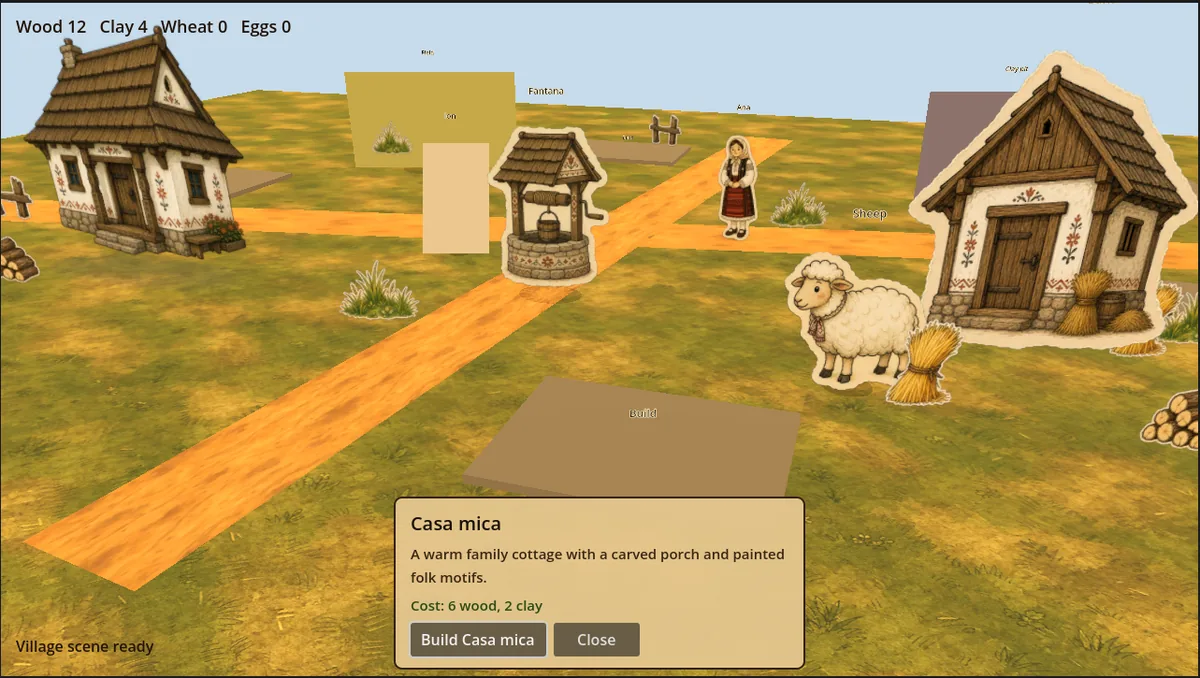
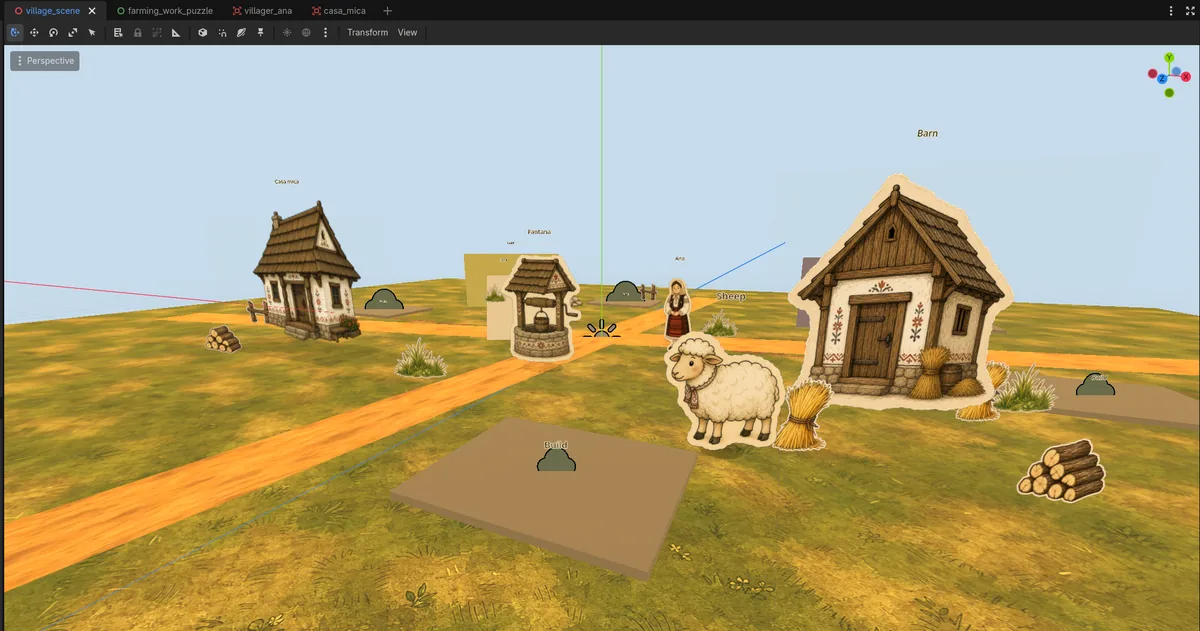
What's next? The game is now out on the App Store as well as Google Play, and a Steam release is planned. And a second chapter is already in early prototyping — this time you'll see your village in full 3D, with sprites drawn like cutouts from a storybook, inspired by Masters of Albion. You can peek at the very first prototype here.
Let's make this game even better together.
— Victor Jdanov, Moldova
Come visit the village
Free on the App Store and Google Play — no account, plays offline, in English, Romanian, Russian and Ukrainian.